Monthly Archives: September 2009

PLAYA ARCO (Parque Nacional BALLENA National Park)

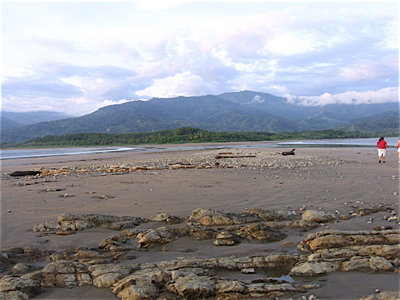
Playa Arco is one of the most beautiful beaches in Costa Rica. It is roadless, so you can only get there by foot or by sea. The hike starts at the entrance for Ballena (Spanish for whale) National Park.

To get there, drive south on the Costanera Sur (Pacific Coast Hwy) from Dominical to Uvita. Cross the bridge over the river and drive south about 3 Km to the sign for Playa Ballena, then drive towards the ocean 1 Km on a dirt road, which dead ends at the park ranger’s office. Pay the entrance fee here, check out the map of this and the other park attractions, and listen to whatever warnings the ranger might have for the ocean and tide conditions.

Playa Arco es una de las playas más bellas de Costa Rica. No tiene camino, por lo cual su acceso se limita a pie o mar. La caminata comienza en la entrada del Parque Nacional Ballena.

Para llegar allí, viaja hacia el sur en la Costanera Sur desde Dominical hasta Uvita. Cruza el puente sobre el río y viaja al sur unos 3 Km hasta el letrero para Playa Ballena, y luego viaja hacia el océano 1Km sobre camino de piedra, el cual termina en la oficina de guardaparques. Paga la entrada, revisa en el mapa las diversas atracciones del parque, y escucha cualquier advertencia sobre condiciones de las mareas y el océano.
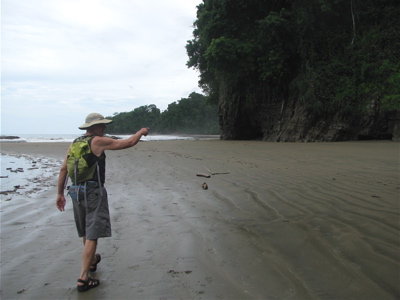
Playa Arco S to N

This is a hike which must be started and completed within a 4 hour time period—two hours before and two hours after low tide. All the ranger stations, area hotels, and the newspaper have tide charts. Better yet, download one before your trip since it’s best to know the tides for all beach walks, especially those with rocks and headlands to cross.

After the ranger station, cross through the campground and hit the beach. Don’t forget sunblock and water. This is not a long walk (20 minutes each way), but it’s also not the easiest beach walk, because you have to cross a large, lose-rock field, and a short but steep headland’s trail. Not a barefoot or flip-flop trek for most of us. Sturdy sandals or sneakers will do fine.

Esta es una caminata que deberá ser completada dentro de un intervalo de 4 horas: Dos horas antes y dos horas después de la marea baja. Todas las estaciones de guardaparques, hoteles de la zona y periódicos tienen los gráficos de mareas. Mejor aún, bájalos de Internet ya que es bueno saber las horas de marea para toda caminata de playa —especialmente aquellas en las que hay que cruzar rocas o cabos.

De la estación guardaparques, cruza el campamento y encuentra la playa. No olvides filtro solar y agua. Esta no es una caminata larga (20 minutos cada dirección), pero no es la caminata más fácil, pues hay que cruzar un gran campo de piedra suelta y un sendero de cabo, corto, pero empinado. Para la mayoría de nosotros, no es una caminata para andar descalzos o en sandalia flip-flop. Está bien usar buenas sandalias o zapatos tenis.
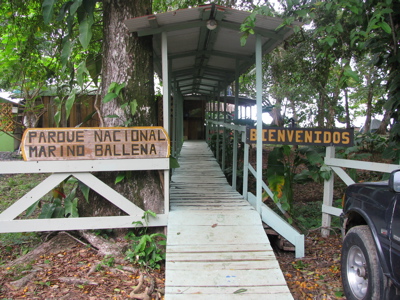
Ballena NP

When you get to the beach, make a right (NW), and walk to the end of Playa Ballena. The unmarked trail starts to your right, in a sandy corner up against the hillside—not on the rocks in front of the surf. Walk up and over the headlands, only a few minutes, and exit onto Playa Arco. Take a good look at the trail where you arrive at the beach so you can find it again when you return.

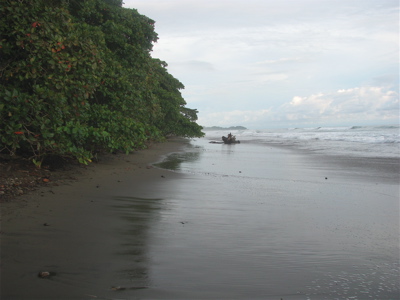
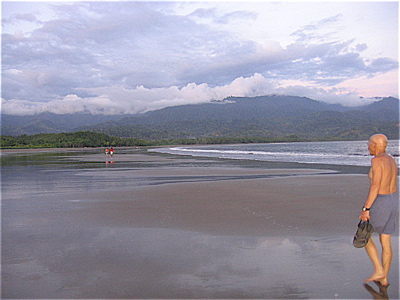
Playa Arco is a wide, flat, kilometer-long beach, sourrounded by steep forested hillside. It has relatively safe swimming. If you arrive with plenty of time to beat the tide change, there are many wonderful, shady spots to relax.

Cuando llegues a la playa, dobla hacia la derecha (noroeste) y camina hasta el final de Playa Ballena. El sendero no está demarcado, pero cominza a tu derecha, en un rincón arenoso contra la ladera —no en las rocas frente al surf. Camina sobre los cabos por algunos minutos, y sal a Playa Arco. Mira bien el sendero cuando llegues a la playa, para que lo puedas encontrar al regreso.

Playa Arco es una playa ancha y plana, de un kilómetro, rodeada de laderas empinadas y boscosas. Nadar es relativamente seguro. Si llegas con suficiente tiempo antes del cambio de marea, hay muchos lugares con sobra donde puedes descansar.
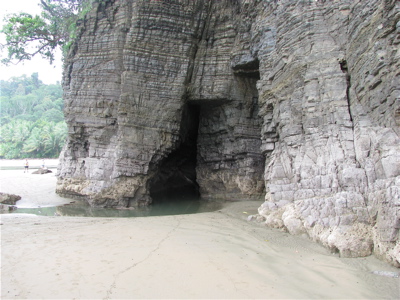
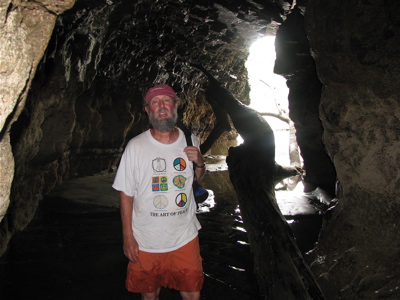
Playa ArcoSea Cave Rich

Down the beach about 300 meters, you come to the principal attraction: a walk through the sea cave. Just around the corner from the cave, in a shady corner, is a waterfall, perfect for cooling off or washing the salt and sand away. Enjoy walking the beach, swimming, and checking out the plants and wildlife. Don’t forget to return before the tide gets too high (easy to do in a place this beautiful).

Ballena National Park has many entrances, some with sea caves and arches, and other spots with long beach walks. The other unique geologic attraction of this park of interest to hikers is the Punta Uvita Tombolo, which in fact looks like a giant whale’s tail, and real whales are commonly sited from there. You can access it from the Bahía Uvita or the Colonia (longer hike) entrances. This is best done plus or minus 4 hours from low tide as it becomes an island during high tide. The reef that this marine park protects starts from the far south point, and runs south to The Ballena Island and Tres Hermanas rocks.

Playa abajo unos 300 metros, encontrarás la principal atracción: Caminar en la cueva. Más allá de la cueva, en un rincón sombreado, hay una catarata perfecta para refrescarse o lavarse la sal y arena. Disfruta de la playa, nadar y observar la vida silvestre, pero no se te olvide devolverte antes de que la marea suba demasiado (fácil de hacer en este lugar tan bello).

El Parque Nacional Ballena tiene muchas entradas, algunas con cuevas y arcos, y otras con largas caminatas de playa. La otra atracción geológica de este parque, de interés para el hiking, es el Tómbolo de Punta Uvita, el cual luce como una cola gigante de ballena, y es común citar ballenas reales desde allí. Puedes accesar la lengüeta por las entradas de Bahía Uvita o Colonia (caminata más larga). Es mejor accesar el lugar dentro de las 4 horas antes o después de la marea baja, pues se convierte en una isla durante la marea alta. El arrecife protegido en este parque marino empieza en la punta sur, hacia el sur hasta las rocas Isla Ballena y Tres Hermanas.
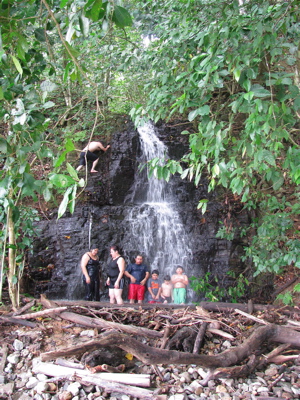
Playa Arco Waterfall

Playa Punta Uvita beach

Playa Punta Uvita beach

Punta Uvita
Punta Uvita

Cataratas NAUYACA Waterfalls

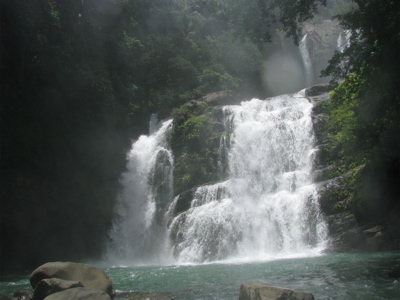
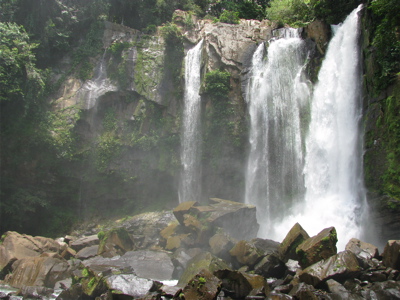
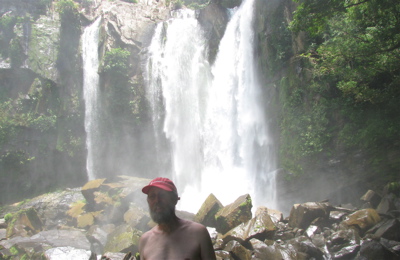
Nauyaca Waterfalls are on the Barú river at the elevation of the village of Platanillo (Highway San Isidro de El General to Dominical). It’s one of the most spectacular waterfalls in Costa Rica. The falls are really five waterfalls. The lower level has two falls and a 1000 sq. meter pool for swimming. The upper level has three falls and an overlook down to the lower pools. In addition, there are quiet pools for bathing all along the river downstream from the falls to the bridge.

Las Cataratas Nauyaca están situadas en el río Barú, a la altura del pueblo de Platanillo en la autopista de San Isidro de El General a Dominical. Son unas de las cataratas más espectaculares de Costa Rica. En realidad son cinco cataratas: El nivel bajo tiene dos caídas y una poza de mil metros cuadrados para nadar. El nivel alto tiene tres cataratas con vista a las pozas de abajo. Además, hay pozas serenas para bañarse a lo largo del río más abajo de las caídas, hacia el puente.

 Nauyaca y Rich


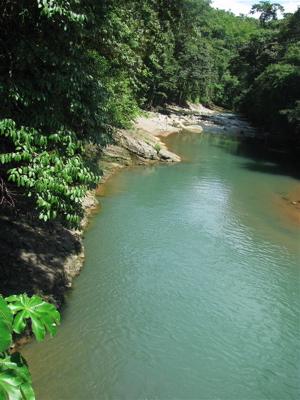
Rio Barú below bridge - bajo el puente.

Rio Barú below bridge - bajo el puente.


To get there you drive 10 Km uphill (towards San Isidro), from the Bridge at Dominical. The office is a signed building on the right (south) side of the road 2 Km before Platanillo. The family of Don Lulo are in the business of running horse tours here, but they do have an admission price of $3 for hikers. 

The entrance to the waterfalls road/trail is 50 meters uphill from their office and may be unmarked. If you arrive by bus, taxi, or two wheel drive car, you are hiking from here—2 to 2 1/2 hrs each way. If you can drive down to the bridge, the hike is 1 1/2 hrs each way. I think it’s okay to leave a car here, but for those that worry, there is a house across the bridge and about 100 meters up the road that will watch your vehicle for $2. If it’s really hot, you can cool off with a dip in the large river pool under the bridge.

Para llegar allí hay que viajar 10Km cuesta arriba (hacia San Isidro), desde el puente en Dominical. El edificio de la oficina tiene rótulo y está a la derecha (al sur) de la carretera, 2 Km antes de Platanillo. La familia de don Lulo tiene el negocio de alquiler de caballos en este punto y también cobra derecho de admisión de $3 para caminantes.

La entrada al sendero/camino para las cataratas está a 50m más arriba de la oficina y puede que no esté demarcado. Si uno llega en bus, taxi o 2X4, hay que caminar desde aquí —de 2 a 2 1/2 horas tanto la ida como la vuelta. Si puedes conducir hasta el puente, la caminata es de 1 1/2 horas de ida y de vuelta. Creo que se puede dejar el auto acá, pero para los que les da miedo, hay una casa frente al puente, donde te cuidan el auto por $2. Si hace mucho calor, puedes refrescarte en una poza grande bajo el puente.

 Nauyaca Road

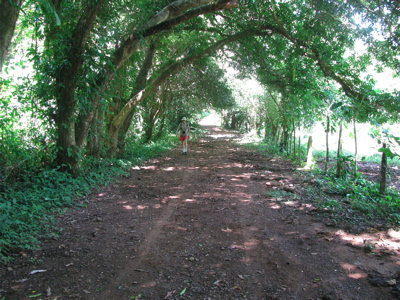
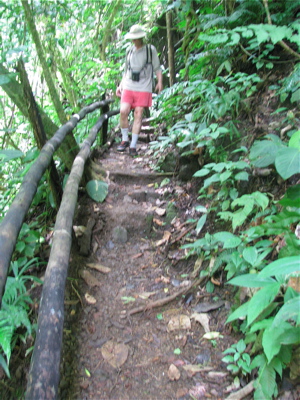
      The trail starts as a road which parallels the Barú river upstream. It is well marked all the way. During rainy season there is more shade on the road, but in dry season it can be hot and sunny. I recommend an early start for both cooler uphill walking, and to avoid the afternoon rains which can be dangerous in any canyon. This is a moderate hike, because there is quite a bit of uphill walking in fairly hot temperatures. At about the halfway point you pass the Don Lulo homestead which has a small rescue zoo and a dinning hall for their horse-trip clients. 

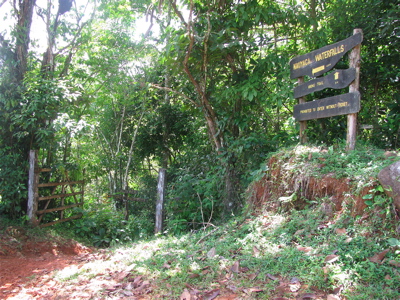
The road then deteriorates in quality and keeps going up until you get to two marked trail entrances on the left. The first is for horses and the second is for hikers. The trail then enters the forest as a single track and does a winding descent to the waterfalls. Halfway down this trail you arrive at the spot where they tie up the horses and everyone walks. There are also change rooms for swimsuits and outhouses at this spot. The trail junction for the lower and upper falls is just below the horse rails. I recommend going to the lower falls first since most people are hot at this point, and need a good swim.

 El sendero empieza como un camino paralelo al río Barú hacia arriba. Está bien demarcado a todo lo largo. En la estación lluviosa hay más sombra en el camino, pero en la estación seca puede estar caliente y soleado. Yo recomiendo empezar temprano por aquello de caminar más refrescados y para evitar las lluvias de la tarde, que pueden ser peligrosas en cualquier cañón. Esta caminata es moderada, pues tiene bastante camino cuesta arriba en temperaturas altas. Más o menos a la mitad se ve lacasona de don Lulo, con su pequeño zoolólico de rescate y su comedor para los clientes de viajes a caballo.

Aquí el camino se deteriora y continúa subiendo hasta que ves las dos entradas a senderos, a tu izquierda. La primera es para caballos y la segunda para caminantes. El sendero entonces entra en el bosque y empieza a descender hacia las cataratas. A mitad de este sendero hay un lugar donde atan los caballos y todo el mundo camina. También hay vestidores y servicios sanitarios en este punto. Yo recomiendo ir primero a la parte baja de las cataratas, pues uno está caluroso y con ganas de nadar.

Nauyaca trail1Nauyaca trail2 

 These are powerful waterfalls with a lot of spray during most of the year, so expect all the rocks to be slippery. I am not very good barefoot, so I pack sandals or watershoes along with me in the day hike pack. Most swimming holes under waterfalls are not easy in and out because of the rocks, but well worth the effort once you’re in the pool. Diving is dangerous unless you have first checked out the spot of your choice for hidden rocks. The upper falls have a smaller pool, but usually it’s too turbulent and the access across the rocks is very difficult. It’s well worth the hike up since the view is excellent. Hike back the way you came and if you are hot, there is a good swim waiting under the bridge over the Río Barú.

The website for Don Lulo is:  http://www.cataratasnauyaca.com

Estas cataratas son poderosas y con mucho riego la mayor parte del año, así que las rocas pueden estar resbalosas. Yo no soy muy hábil descalzo, por lo que llevo sandalias o zapatos de agua. Las pozas bajo cataratas normalmente tienen difícil acceso al meterse y salirse, debido a las rocas, pero son deliciosas una vez adentro. Allí el clavado es peligroso, a no ser que primero revises que el lugar que escogiste no tiene rocas escondidas. 

Las cataratas de arriba tienen una poza más pequeña, pero usualmente muy turbulenta y el acceso a través de las rocas es muy difícil. Vale la pena esta caminata, pues la vista allí arriba es excelente.

De vuelta, camina por la misma ruta y si tienes calor, te espera una deliciosa nadada bajo el puente del río Barú.

El sitio web de don Lulo es: http://www.cataratasnauyaca.com


Lower Fall  - Caida inferior

Lower Fall - Caida inferior

Upper Falls - Caida superior

Upper Falls - Caida superior

HACIENDA BARU

Hacienda Barú


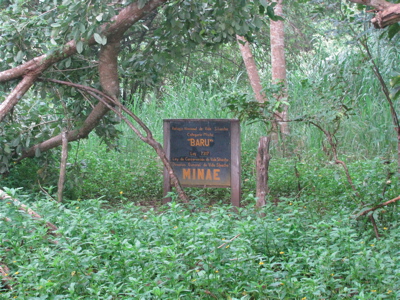
Hacienda Barú is one of the oldest ecotourism projects in Costa Rica. The majority of this large property is regulated by MINAE (Ministry of Environment and Energy) under the National Wildlife Refuge system. Payment of the park admission fee gives you access to 7 Km of trails and 3 Km of wild beach open to the public. The trail entrance fees are included in the price of the rooms for their guests.

Hacienda Barú es uno de los proyectos ecoturísticos más antiguos de Costa Rica. La mayoría de esta propiedad es regida por el MINAE (Ministerio del Ambiente y Energía) como Refugio de Vida Silvestre.

El pago de admisión al parque nos da acceso a 7 Km. de senderos y 3 Km. de playa natural abierta al público. La entrada a los senderos está incluida en el precio de las habitaciones para huéspedes. 

 Baru

Hacienda Barú does have some more back country trails, which are only open to guided hikes. 

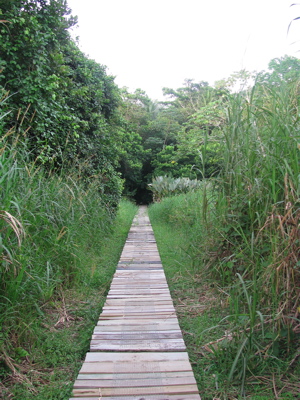
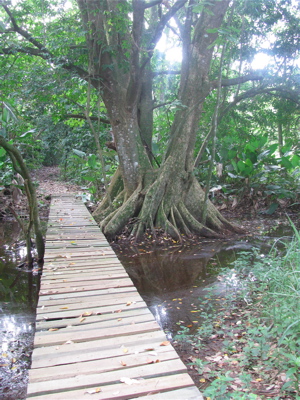
Of the 7 Km of self-guided trails, only the 2.5 Km Lookout Trail (sendero Mirador), is a loop of moderate difficulty. All the other trails are well designed and very easy. This makes it perfect for seniors, families with young children, and those who want to walk slowly and look for wildlife. 

Hacienda Barú también tiene senderos internos, los cuales sólo están abiertos para caminatas guiadas.

De los 7 Km. de senderos auto-guiados, sólo el Sendero Mirador, de 2.5 Km. es una vuelta con dificultad moderada. Los demás senderos están bien diseñados y son bastante fáciles, lo cual es perfecto para adultos mayores, familias con niños pequeños, y quienes quieran caminar despacio y ver vida silvestre.  

 Baru trail          Baru trail 2

The Refuge combines ocean, wetlands, river, coastal mountain, farmland, and both primary and secondary forest environments. For ambitious hikers, combining all the trail loops with a beach walk to the mouth of the Barú river, will take in all the different terrains and be a great workout. Hacienda Barú is also an excellent place to do a night trail walk, or night beach walk depending on the weather and tides.

El Refugio combina ambientes de océano, pantano, río, montaña costera, finca y bosque, tanto primario como secundario. Para caminantes ambiciosos, se puede combinar todas las vueltas de los senderos con una caminata por la playa hasta la boca del río Barú comprenderá todos los diferentes terrenos, siendo un gran ejercicio. La Hacienda Barú también es un lugar excelente para caminar de noche, o por la playa, dependiendo del clima y las mareas.

 Baru Playa

Hacienda Barú is located 3 Km north of Playa Dominical on the new Costanera Sur highway from Quepos. Check out their web site for more info on accommodations and tours.

Hacienda Barú está situada 3 Km. al norte de Playa Dominical, por la Costanera Sur que viene desde Quepos. Visite su página web para más información sobre hospedaje y tours.

http://www.haciendabaru.com

North? – ¿Norte?

An easy way to get oriented in Costa Rica: Most Catholic churches were built facing west!

I have seen exceptions, which are immediately noticeable once you get used to using the church as a guide.

This fact is particularly helpful when walking in the city, or giving directions.

Una manera fácil de orientarse en Costa Rica: ¡La mayoría de las iglesias Católicas fue construida dando al oeste!

He notado que hay excepciones, las cuales se detectan de inmediato una vez que uno se acostumbra a usar las iglesias para puntos cardinales.

Este dato es particularmente útil cuando uno camina en la ciudad, o da direcciones.

WILSON GARDENS – JARDINES WILSON

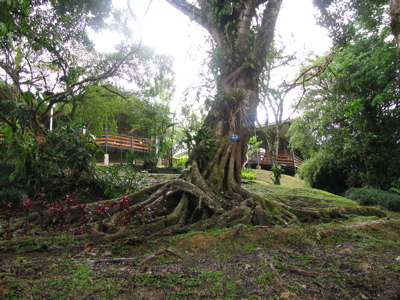
Lodging Las CrucesWilson Gardens – Las Cruces  OTS (Organization For Tropical Studies)
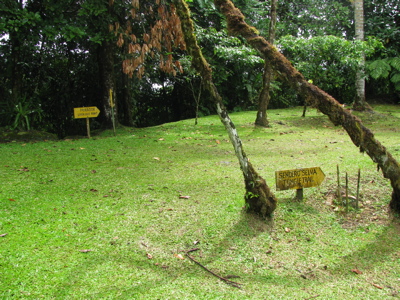
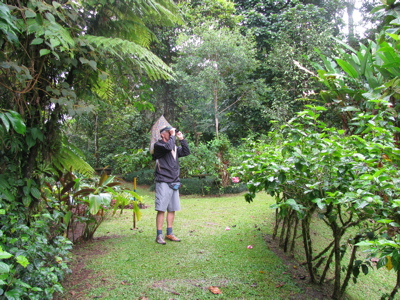
I will not repeat here what you can see on the OTS website:  http://www.esintro.co.cr or    http://www.ots.ac.cr

This is a fabulous park in the Southern Zone near San Vito. It’s most frequented by botanists and birders, but has excellent trails for hikers also. If you are looking for athletic or challenging hiking, you will be better off up at La Amistad National Park.

Wilson Gardens has garden and forest trails that go from easy strolls to moderate two-hour rambles. This is good since it’s not easy to find trails for less ambitious walks in the mid-elevation forests of Costa Rica.

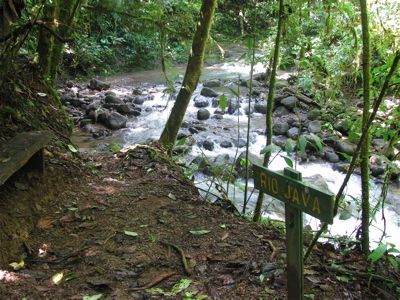
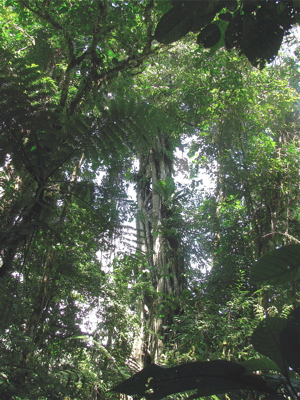
What is of true interest to hikers here is the Rio Java trail. Big trees, beautiful plants, wildlife and a clean river with swimming holes are some of the attractions on this trail. If you go during wet season you may want to pack some water shoes, sandals or flip flops to explore the trails and primary forest on the north side of the Rio Java.

Wilson Gardens, unlike the OTS La Selva Reserve, has a day entrance fee that is not mentioned on their website. It’s $8 for foreigners and $3 for Costa Ricans and it is not required that you go with a guide. It’s located 6Km above San Vito on the road to Ciudad Neilly near the southern border with Panama.

senderos - trails

senderos - trails

Wilson Birder

Jardines Wilson – Las Cruces  OET (Organización de Estudios Tropicales)

No quiero repetir aquí lo que se puede ver en el portal web de la OET:

http://www.esintro.co.cr ó    http://www.ots.ac.cr

Este es un parque fabuloso en la Zona Sur, cerca de San Vito. Es frecuentado por botánicos y observadores de pájaros, pero también tiene senderos excelentes para caminantes. Si buscas caminatas atléticas o retadoras, sería mejor que fueras al Parque Nacional La Amistad.

Los Jardines Wilson tienen senderos de jardín y bosque, los cuales van desde caminatas fáciles, hasta trechos moderados de dos horas de duración, lo cual es bueno, porque no es fácil encontrar senderos para caminatas menos ambiciosas en los bosques costarricenses de elevación media.

El sendero Río Java es el más interesante para hiking, por sus grandes árboles, vegetación hermosa, vida silvestre y río limpio con pozas para nadar. Si vas durante la estación lluviosa, deberías pensar en llevar zapatos de agua, o sandalias para explorar los senderos y bosque primario en la parte norte del río Java.

La tarifa de entrada a Jardines Wilson no se menciona en el sitio web de la OET (como sí mencionan a la Reserva La Selva). La entrada cuesta $8 para extranjeros y $3 para nacionales, pero no requiere que vayas con guía. Se encuentra a 6Km más arriba de San Vito, en la carretera a Ciudad Neilly, cerca de la frontera con Panamá.

Cabina Wilson - Wilson Cabin

Cabina Wilson - Wilson Cabin

Río Java

Río Java

Wilson Strangler